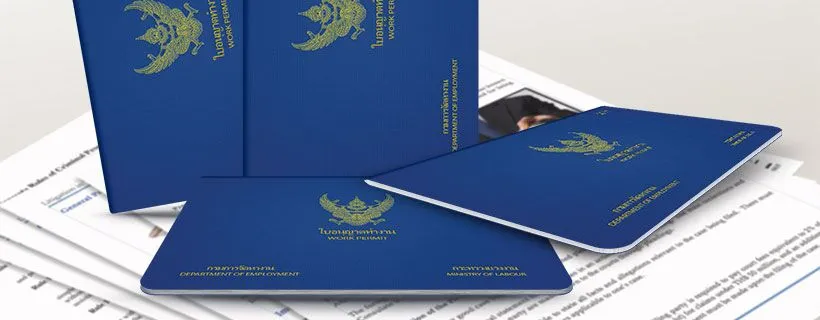
A Thai work permit is a mandatory legal authorization allowing a foreign national to work lawfully in Thailand. Regardless of visa type or job seniority, most foreigners must hold a valid work permit before performing any form of employment, business activity, or professional service in the Kingdom. Thailand enforces work permit regulations strictly, and violations can result in fines, imprisonment, deportation, and blacklisting.
This article provides an in-depth and practical explanation of Thai work permits, including the legal basis, eligibility requirements, employer obligations, application procedures, restricted occupations, penalties, and common compliance issues.
1. Legal foundation of the Thai work permit system
Thai work permits are governed primarily by the Foreigners’ Working Management Emergency Decree B.E. 2560 (2017) and its amendments. This law replaced the older Alien Employment Act and significantly increased penalties for illegal employment while modernizing compliance procedures.
Under Thai law:
-
Any foreigner who engages in work must hold a work permit
-
“Work” is broadly defined and includes physical, mental, paid, unpaid, or voluntary activities
-
A valid visa alone does not authorize work
Immigration status and work authorization are separate legal requirements.
2. What qualifies as “work” in Thailand
Thailand interprets “work” broadly. Activities that typically require a work permit include:
-
Employment under a Thai company
-
Management or director-level duties
-
Consulting or advisory services
-
Teaching, training, or coaching
-
Operating or managing a business
-
Technical or professional services
Even short-term or unpaid activities may be considered work if they benefit a business entity in Thailand.
3. Who needs a Thai work permit
Most foreigners working in Thailand require a work permit, including:
-
Employees of Thai companies
-
Directors actively managing a company
-
Foreign specialists or consultants
-
Teachers and trainers
-
Foreign employees of BOI-promoted companies
Limited exemptions exist, such as certain diplomatic roles or short-term urgent work with prior notification.
4. Eligibility requirements for a Thai work permit
4.1 Visa requirement
Before applying for a work permit, the foreigner must hold a Non-Immigrant Visa, commonly:
-
Non-Immigrant “B” (Business)
-
Non-Immigrant “O” (Marriage or family-based)
-
BOI-supported visa categories
Tourist visas and visa exemptions do not qualify.
4.2 Employer qualifications
The Thai employer must generally meet minimum criteria, including:
-
Registered Thai company
-
Paid-up capital (commonly THB 2 million per foreign employee)
-
Proper business objectives
-
Valid business licenses
-
Compliance with tax and social security obligations
BOI-promoted companies may receive exemptions or reduced requirements.
4.3 Employee qualifications
The foreign employee must:
-
Have qualifications suitable for the position
-
Not engage in restricted occupations
-
Possess relevant education or experience
-
Meet health and background requirements
5. Restricted and prohibited occupations
Thailand reserves certain jobs exclusively for Thai nationals. Foreigners are prohibited from working in occupations such as:
-
Manual labor
-
Hairdressing and beauty services
-
Tour guiding
-
Street vending
-
Traditional Thai crafts
-
Clerical and secretarial roles
Employers and foreigners must carefully review job descriptions to ensure compliance.
6. Work permit application process
6.1 Where to apply
Applications are submitted to:
-
The Department of Employment (DOE), or
-
One-Stop Service Centers (for BOI and qualified businesses)
6.2 Required documents
Typical documents include:
-
Passport and visa
-
Employment contract
-
Company affidavit and registration documents
-
Tax filings and financial statements
-
Office lease agreement
-
Educational certificates
-
Job description
Incomplete or inconsistent documentation is a common cause of delay.
6.3 Processing timeline
Processing generally takes:
-
7–14 business days for standard cases
-
Faster processing for BOI-promoted companies
Work permits are usually issued for up to one year and may be renewed.
7. Conditions and limitations of a work permit
A Thai work permit specifies:
-
Employer
-
Job title and duties
-
Work location
-
Validity period
Foreigners may only work within the scope stated in the permit. Any change in role, employer, or location typically requires amendment or reissuance.
8. Work permit renewals and amendments
Renewals must be filed before expiration and require updated:
-
Company documents
-
Tax compliance records
-
Visa extension
-
Employment confirmation
Amendments are required for:
-
Job changes
-
Salary changes
-
Office relocation
-
Employer restructuring
Failure to update a work permit can result in penalties.
9. Work permit cancellation
A work permit must be canceled when:
-
Employment ends
-
The foreigner leaves Thailand permanently
-
The company closes or restructures
Cancellation is a legal obligation and should be completed promptly to avoid future complications.
10. Relationship between work permit and visa
A work permit does not automatically extend a visa. Foreigners must:
-
Maintain a valid visa
-
Apply for visa extensions separately
-
Comply with immigration reporting requirements (e.g., 90-day reporting)
Both documents must remain valid at all times.
11. BOI and special work permit regimes
Companies promoted by the Thailand Board of Investment (BOI) enjoy benefits such as:
-
Reduced capital requirements
-
Faster work permit issuance
-
Permission to employ foreign specialists
-
Streamlined online processing
BOI status is especially attractive for technology, manufacturing, and regional headquarters.
12. Penalties for working illegally
Penalties are severe:
-
Fines up to THB 100,000
-
Imprisonment
-
Deportation
-
Immigration blacklist
Employers also face heavy fines for hiring foreigners without proper authorization.
13. Common mistakes and compliance risks
Frequent errors include:
-
Working on a tourist visa
-
Performing duties outside the permit scope
-
Failing to renew permits on time
-
Using nominee structures
-
Assuming director status removes work permit requirements
Strict enforcement makes professional guidance essential.
14. Practical compliance strategies
Best practices include:
-
Proper visa planning before arrival
-
Accurate job descriptions
-
Regular compliance audits
-
Coordinated visa and work permit renewals
-
Legal review before role changes
Proactive compliance minimizes disruption and legal exposure.
Conclusion
The Thai work permit system is a cornerstone of Thailand’s foreign labor regulation framework. While the application process is well-defined, the scope of “work,” strict enforcement, and severe penalties mean that even minor mistakes can have serious consequences.
Foreigners and employers who understand the legal requirements, maintain proper documentation, and follow compliance procedures can work and operate in Thailand legally and efficiently. Given the evolving regulatory environment, seeking professional advice remains one of the most effective ways to ensure long-term compliance and operational stability.